Purchasing an existing business is one of the fastest ways to step into entrepreneurship or expand your current operations. Instead of building from scratch, you gain a proven model, customer base, and revenue streams. However, most buyers don’t have enough capital on hand to pay the full purchase price upfront. That’s where a business acquisition loan comes in.
These loans are intended especially to assist business owners in funding the acquisition of an already-existing company. But lenders are cautious, they want to see solid financials, a realistic repayment plan, and confidence that you can successfully run the business. In this detailed guide, we’ll explore how to apply for a business acquisition loan, what lenders look for, which financing options are available, and how to improve your chances of approval
Why Buy an Existing Business?
Since many companies fail within the first five years, starting a firm from scratch can be dangerous. By contrast, buying an existing company gives you immediate advantages. You’re not just acquiring assets; you’re stepping into a business that already has systems, employees, and customers.
With the right financing, the transition can be smoother than you expect. Lenders often view a loan to buy a business as less risky than a startup loan because the financial performance of the company is already proven. You can also use the business’s historical financial data to forecast growth and reassure lenders.
This makes a business purchase loan more attainable than many first-time entrepreneurs realize. Instead of investing years in building from the ground up, you can leverage acquisition financing to take control of a ready-to-run company.
Step 1: Understand What Lenders Look For
Before applying, it’s essential to understand the criteria lenders use to assess your eligibility.
Personal Credit
An important factor is your individual credit history. A high credit score shows responsibility with debt, making lenders more confident. While a few blemishes won’t automatically disqualify you, lower scores can lead to higher business loan interest rates in 2025.
Business Credit
If you already own a company, lenders will review its financial standing as well. They want to ensure no outstanding liens, late payments, or bankruptcies exist. Strong business loan eligibility criteria often include both personal and business financial strength.
Experience in the Industry
Lenders prefer borrowers who understand the business they’re buying. If you’re applying for a small business acquisition loan in California, having prior experience or training in the industry significantly strengthens your application.
Details of the Target Business
The health of the business you’re acquiring is equally critical. Lenders will ask:
- What is the fair market value of the business?
- Are the financials stable and profitable?
- Does the company carry significant debt?
- Is the asking price supported by a professional valuation?
Your ability to answer these questions during due diligence for business loans can determine whether financing is approved.
Step 2: Gather the Right Documents
Proper documentation can speed up the loan approval process. Lenders want evidence of your financial stability, as well as the viability of the business you plan to buy.
Personal Documents
- Government-issued ID and Social Security number
- Recent tax returns (usually two to three years)
- Bank statements
- A personal financial statement
- A business plan outlining your strategy for running the acquired company
Business Documents
- The business purchase agreement financing details
- The company’s tax returns for the past 2–3 years
- Profit and loss statements and balance sheets
- Projected financials for the next three to five years
- A breakdown of the purchase price, including assets, goodwill, and inventory
Being prepared with these documents not only shortens processing time but also demonstrates professionalism, increasing your chances of approval.
Step 3: Choose the Right Financing Option
Not all business acquisition financing options are the same. Your credit score, the size of the purchase, and the availability of a down payment will all influence your decision.
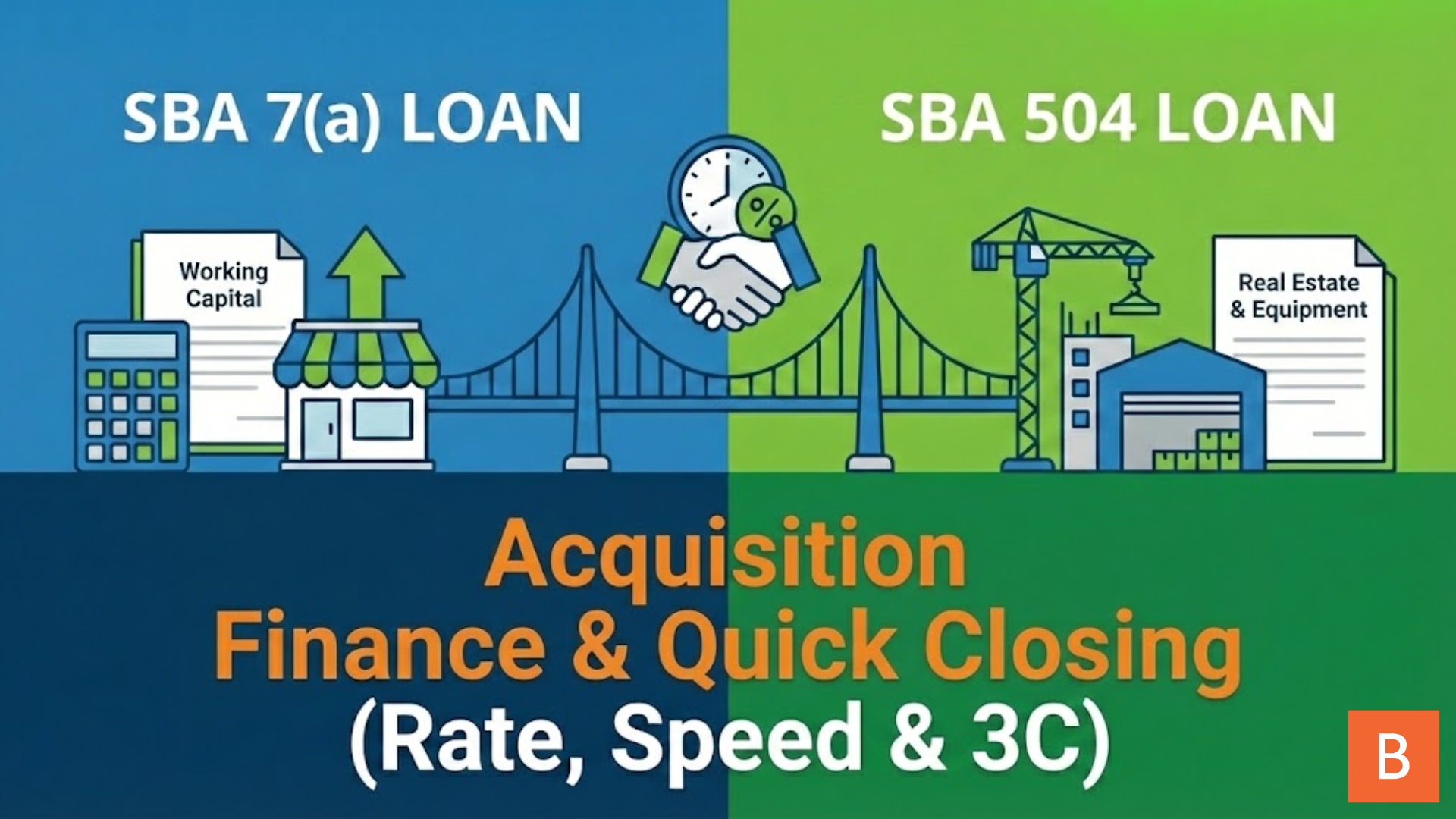
SBA 7(a) Loan for Business Purchase
The most common way to purchase an existing business in the United States is through an SBA 7(a) loan. With the support of the Small Business Administration it provides advantageous conditions like extended repayment durations, reduced down payment requirements, and low interest rates. However, the application process can be time-consuming, and you’ll typically need a credit score above 670.
Traditional Bank Loans
Banks and credit unions also provide business purchase loans. These usually require excellent credit, strong collateral, and a detailed repayment plan. While stricter, they often offer competitive business loan interest rates.
Seller Financing Business Acquisition
Under this agreement, a portion of the purchase price is financed by the seller. This reduces the amount you need to borrow from banks or SBA lenders. Seller financing is flexible and shows the seller’s confidence in the continued success of the business.
Private Equity or Investors
If you’re acquiring a larger business, private equity firms or venture capitalists may step in. In return for ownership shares, they offer capital. While this reduces personal financial risk, you’ll give up some control of the company.
Personal Savings or Hybrid Models
Some entrepreneurs use their savings or combine multiple funding sources. For example, you might combine a secured business loan with seller financing and personal investment to cover the total purchase cost.
Step 4: The Loan Application Process
Once you’ve chosen the right financing path, it’s time to apply. This step requires patience, accuracy, and attention to detail.
Check Eligibility
Ensure you meet the lender’s minimum requirements, such as credit score, down payment, and collateral. Each lender has different thresholds, so compare carefully.
Compare Loan Products
Don’t settle for the first approval. Compare terms, business loan interest rates, repayment schedules, and fees. The “cheapest” loan isn’t always the best, factor in flexibility and penalties as well.
Submit a Complete Application
Errors or missing information can delay approval. Provide accurate data on your finances and the business being purchased. Remember, lenders are assessing both you and the company.
Review the Agreement
Before signing, carefully review repayment terms, guarantees, and collateral requirements. For acquisitions in California, consider consulting a local attorney familiar with business acquisition funding options.
Conclusion
Applying for a business acquisition loan doesn’t have to be overwhelming. By preparing documents in advance, understanding eligibility criteria, and exploring different business acquisition financing options, you can significantly improve your chances of approval.
Whether you choose an SBA 7(a) loan, a bank loan, or seller financing, the key is to present yourself as a credible buyer who can continue running the business profitably. With the right strategy, you’ll not only secure financing but also position yourself for long-term success as a business owner. If you’re ready to take the leap, start comparing lenders, reviewing interest rates, and preparing your financials today, your next business opportunity could be closer than you think.
FAQs:
How hard is it to get a business acquisition loan?
It’s generally easier than financing a startup because the business has a financial history. However, lenders still require good credit and thorough documentation.
Can I buy a business with no money down?
Yes, through seller financing business acquisition or investor funding. However, most lenders prefer you to have some equity in the deal.
Do banks offer loans for business acquisitions?
Yes. Many banks and credit unions provide bank loans to purchase a business. Expect stricter approval criteria compared to online lenders.
Can I qualify with poor credit?
It’s possible, but expect higher rates or limited options. Alternative lenders may consider your application if you can show strong business performance.
What’s the difference between secured vs unsecured business loans?
Whereas unsecured loans only consider your creditworthiness, secured loans demand collateral (such property or equipment). Secured loans often have better rates but higher risk if you default.
About the Author: Chris Chi

Related Posts








you might also like



Due Diligence,Financing,How To Buy A Business,How To Sell A Business
By Greg Carpenter




Financing
By Peter Siegel, MBA