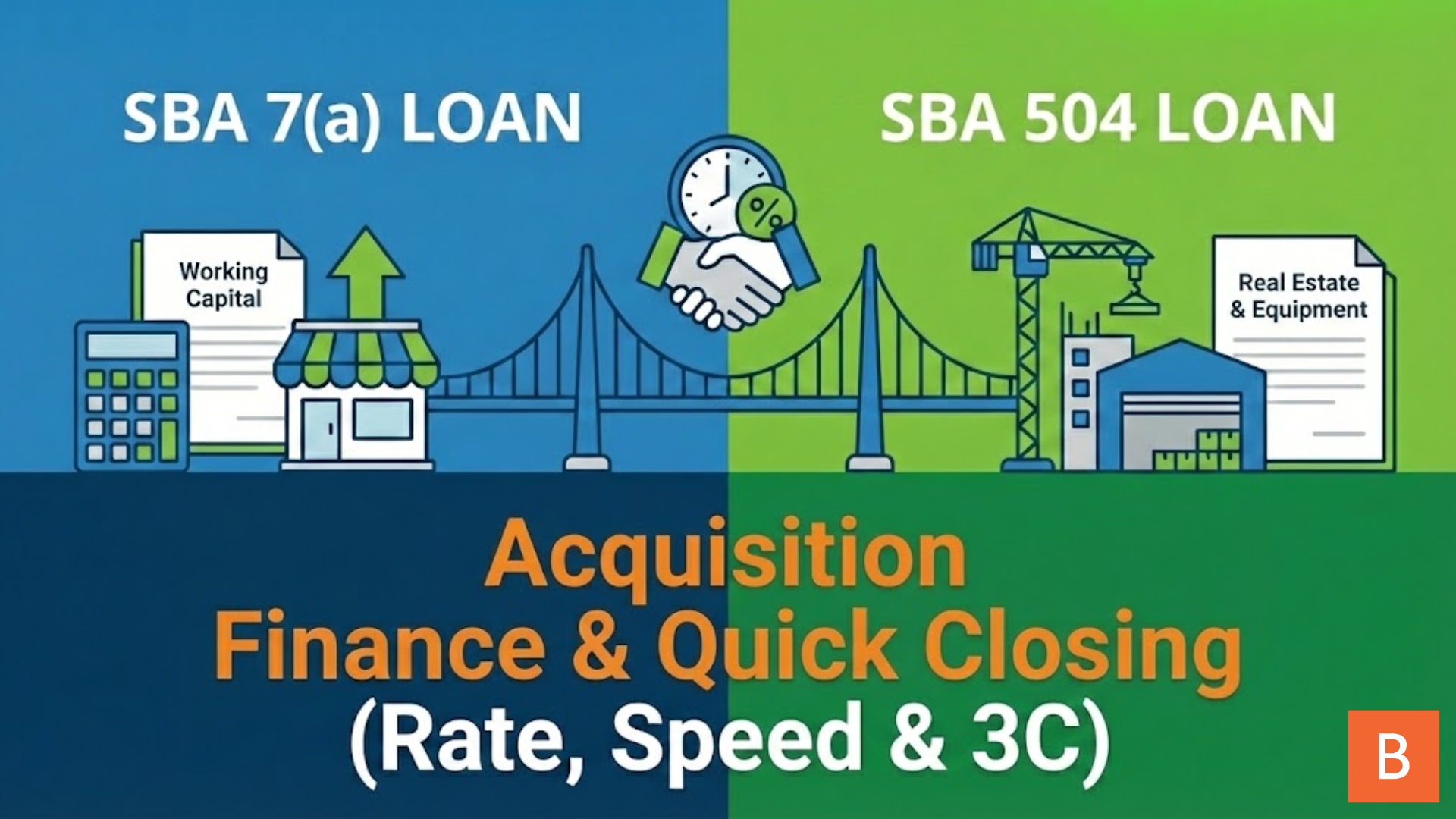
1. The Power Players: SBA 7(a) vs. SBA 504
Choosing the right program is critical. Here is the technical breakdown of limits and structures for 2026.
1) SBA 7(a) Loan: The “Swiss Army Knife” of Acquisition
Designed for small businesses unable to secure conventional financing, these funds cover real estate, working capital, equipment, and acquisitions with flexible terms.
- Loan Limits & Facts:
- Maximum Loan Amount: $5 million.
- Maximum Guaranty: Typically up to $3.75 million (75% of the total loan) for loans over $150,000.
- Special Cases: International Trade loans can receive up to a 90% guaranty, according to the U.S. Small Business Administration.
- Small Loan Subprograms: Programs like SBA Express have lower limits (typically $500,000) but faster processing.
- Important Details:
- Use of Funds: Real estate, equipment, debt refinancing, working capital, and business acquisitions (including goodwill).
- Maturity: Up to 25 years for real estate; up to 10 years for working capital and equipment.
- Eligibility: Must be a for-profit business operating in the US, meet SBA size standards, and demonstrate repayment ability.
2) SBA 504 Loan: The “Real Estate Powerhouse”
In the US, the SBA 504 loan program limits are primarily defined by the debenture amount (the portion provided by a Certified Development Company or CDC), rather than a hard cap on the total project size. This makes it ideal for heavy assets and real estate.
- SBA 504 Funding Limits: The maximum loan amount depends on the project’s classification:
- Standard Projects: Capped at $5 million.
- Small Manufacturers: Can borrow up to $5.5 million per project.
- Green Energy Projects: Eligible for up to $5.5 million per project, with an aggregate lifetime limit of $16.5 million across multiple projects.
- Minimum Amount: Typically starting at $50,000.
- Project Structure & Total Value: Because the 504 loan only covers a portion of the project, the total project value can be much higher than the SBA limits. A typical structure includes:
- 50% from a private lender (e.g., a bank) with no regulatory limit on this portion.
- 40% from the CDC/SBA (subject to the caps above).
- 10% equity contribution from the borrower.
2. Popular Categories for SBA Financing on BizBen (in 2026)
Lenders love stability. While available across many sectors, certain business categories listed on BizBen are viewed more favorably due to resilience and steady cash flow:
- Professional Practices: Medical, dental, veterinary, and CPA firms (low default rates).
- Essential Service Providers: HVAC, plumbing, electrical, and restoration services.
- Established Franchises: Proven business models with corporate support.
- Light Manufacturing & B2B Distribution: Businesses with tangible assets and B2B contracts.
- Childcare and Senior Care Facilities: High demand with consistent revenue.
“The categories listed above generally face a smoother path to underwriting approval compared to other sectors. by BizBen source.
3. Cracking the Code: How to Secure Great Interest Rates
SBA rates are pegged to the prime rate plus a “spread.” To get lenders on BizBen fighting for your business, focus on the “Three C’s”:
- Credit: Personal credit above 680 is the baseline; 720+ gets you preferred tier status.
- Capacity (Cash Flow): The business must generate enough cash to pay the loan, pay you, and have a cushion. A Debt Service Coverage Ratio (DSCR) of 1.25x+ is standard.
- Character (Experience): Transferable management skills reduce lender risk and improve your rate offers.
4. Speeding Up the Process: Secrets to a Quick Escrow Closing
Don’t let a 90-day close kill your deal. Here is how to close in 45–60 days:
- The “Complete Package” Strategy: Submit 3 years of tax returns (personal/business), PFS, resume, and business plan all at once. Do not drip-feed documents.
- Demand a “PLP” Lender: Ask if they are a Preferred Lender Program (PLP) member. They have authority to make final credit decisions in-house without waiting for SBA headquarters review.
- Be Hyper-Responsive: Respond to lender queries in hours, not days.
- Seller Cooperation: Ensure the seller has their P&Ls and balance sheets organized before opening escrow.
Conclusion
Securing an SBA loan is a marathon, not a sprint, but it remains the best path to ownership for most BizBen buyers. Whether you utilize the flexibility of the 7(a) for an acquisition or the massive leverage of the 504 for real estate, understanding these limits and preparing an organized loan package is your key to closing the deal.
Ready to find your financing? Visit the BizBen Resources section to connect with specialized SBA lenders today.
Joshua Kim, BizBen.com
About the Author: Joshua Kim

Related Posts









you might also like


Financing,Franchise,How To Sell A Business
By Chris Chi



Financing
By Peter Siegel, MBA



Financing,How To Buy A Business,How To Sell A Business
By Greg Carpenter